International Craft Revival (ICR)
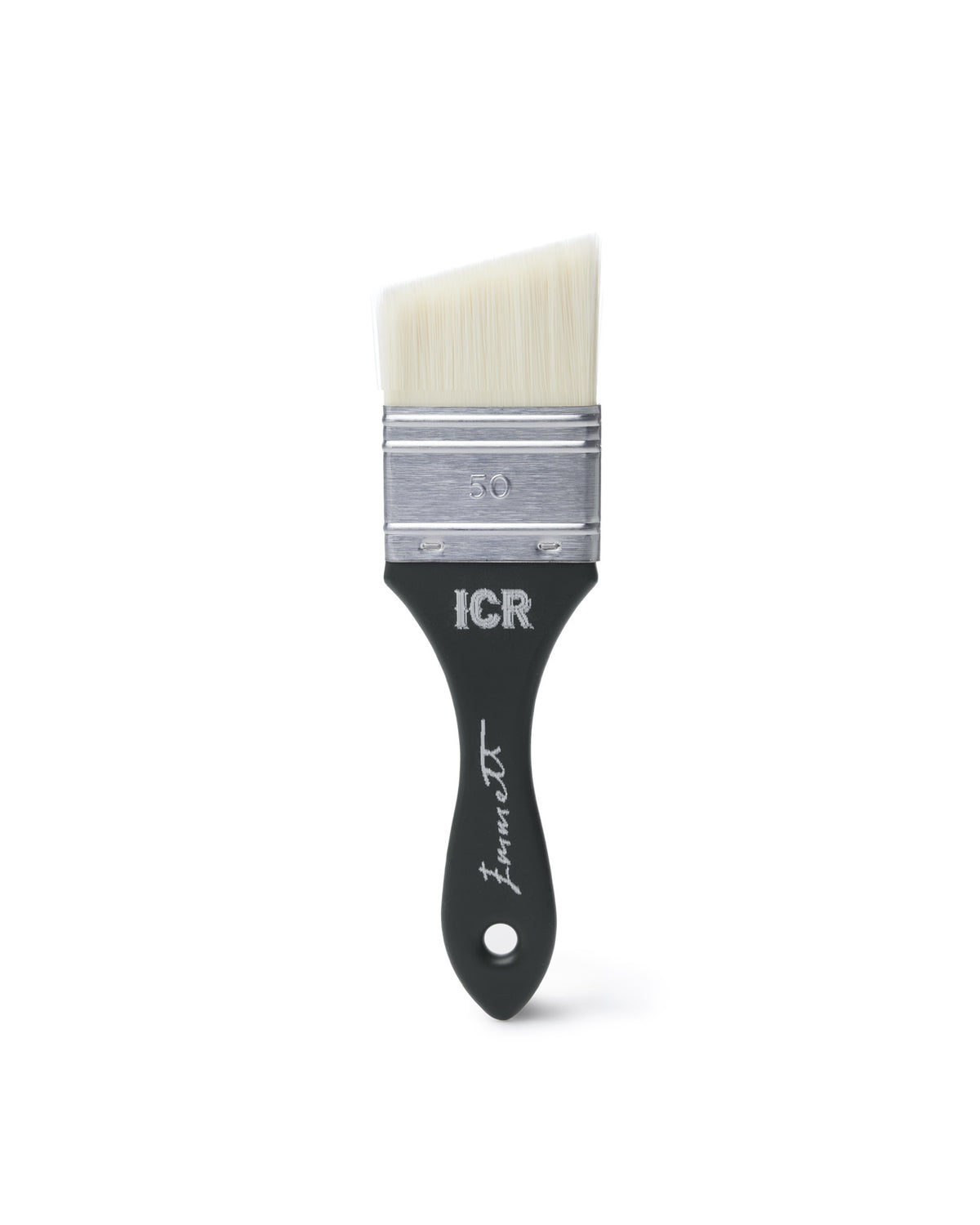
Emmett Angled Spalter - about 1.5" (35mm), about 2" (50mm) and about 3" (75mm)
Emmett Angled Spalter - about 1.5" (35mm), about 2" (50mm) and about 3" (75mm)
Couldn't load pickup availability
The Emmett Angled Spalter is a thin, angle-cut synthetic brush made for cutting in and laying down a smooth, low-brush-mark finish on trim, doors, window casings and cabinetry. It is handmade in Italy with ultra-soft Syntelux synthetic silk bristles, and it holds and releases heavily pigmented gloss and satin paint evenly so strokes level out cleanly. Choose the 1.5" (35mm) for fine detail, the 2" (50mm) for doors and general woodwork, or the 3" (75mm) for wider trim boards and cabinet panels.
Named in tribute to Emmett Fiore, Fine Paints of Europe's colorist and educator, the Emmett Spalter brush represents both universality and artistry. Handmade Italian brushes, crafted with ultra-soft Syntelux synthetic silk bristles, this thin Spalter is designed for precision and smoothness.
Materials and construction: Handmade in Italy with ultra-soft Syntelux synthetic silk bristles, angled cut, available in 1.5" (35mm), 2" (50mm), and 3" (75mm).
Best uses: Cutting in around trim, doors, window casings, and cabinetry where a clean edge and glass-smooth finish both matter.
Recommended pairing: Designed to perform well with both alkyd and waterborne paints, primers, urethanes, and varnishes, across gloss and satin finishes.
Frequently asked questions
Question: What is an Emmett Angled Spalter used for? Answer: It's built for applying heavily pigmented, high-gloss oil and waterborne paints, producing smooth, brush-mark-free coverage on trim, doors, and cabinetry.
Question: What size should I choose? Answer: The 1.5" (35mm) size suits fine detail and trim work, the 2" (50mm) size suits doors and general woodwork, and the 3" (75mm) size suits larger flat surfaces such as cabinetry panels or wide trim boards.
Question: What's the difference between the Emmett Angled and Emmett Flat Spalter? Answer: The angled version is cut on a bias, which helps with cutting in against edges and corners. The flat version has a square profile suited to broad, even strokes across flat, open surfaces.
Question: What paints work best with this brush? Answer: It performs well with both alkyd and waterborne paints, primers, urethanes, and varnishes, across gloss and satin finishes.
Share